I wrote up the post on Substack. Please follow this link to read it there. Blogger isn't playing nice with LaTeX at the moment.
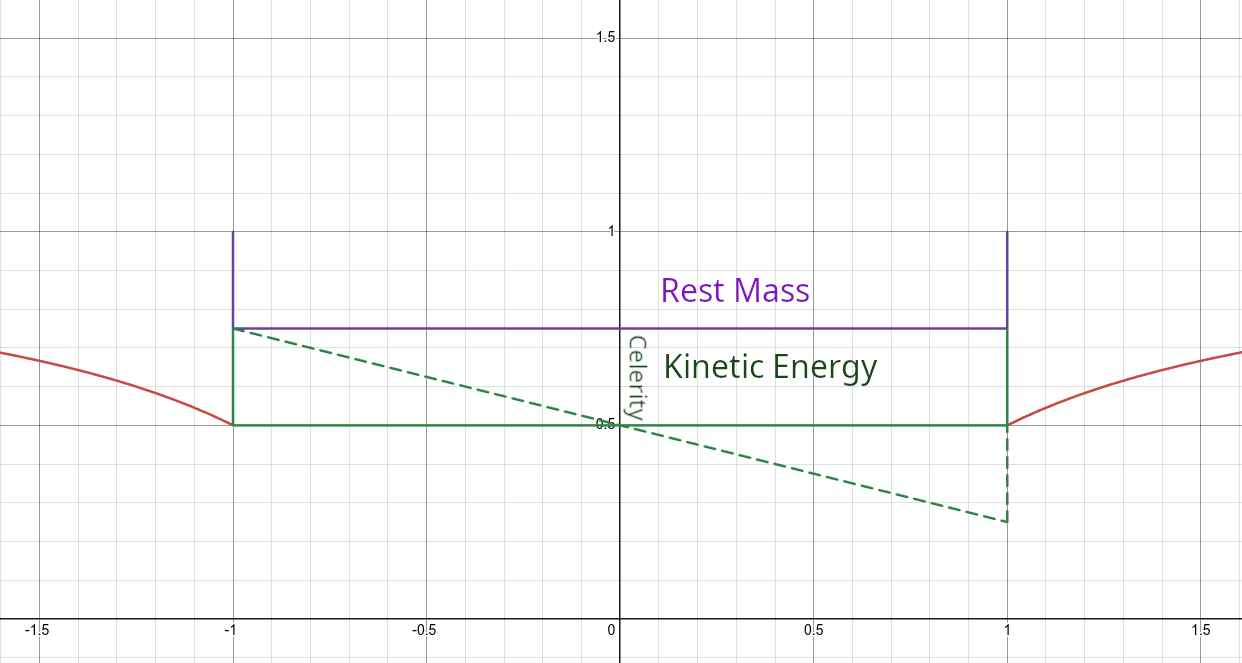
Here's the diagram. The formulas are in the other post.
'Normal' is a statistical average. There may be such a thing as a normal person, but I haven't met him yet.
My comments on books, games, guns, science, politics, and whatnot.
I wrote up the post on Substack. Please follow this link to read it there. Blogger isn't playing nice with LaTeX at the moment.
Here's the diagram. The formulas are in the other post.
It's been nearly 2,000 years since His example, sacrifice, and resurrection. What have we learned? What have we forgotten?
In the end of the sabbath, as it began to dawn toward the first day of the week, came Mary Magdalene and the other Mary to see the sepulchre.
And, behold, there was a great earthquake: for the angel of the Lord descended from heaven, and came and rolled back the stone from the door, and sat upon it.
His countenance was like lightning, and his raiment white as snow:
And for fear of him the keepers did shake, and became as dead men.
And the angel answered and said unto the women, Fear not ye: for I know that ye seek Jesus, which was crucified.
He is not here: for he is risen, as he said. Come, see the place where the Lord lay.
And go quickly, and tell his disciples that he is risen from the dead; and, behold, he goeth before you into Galilee; there shall ye see him: lo, I have told you.
And they departed quickly from the sepulchre with fear and great joy; and did run to bring his disciples word.
And as they went to tell his disciples, behold, Jesus met them, saying, All hail. And they came and held him by the feet, and worshipped him.
I have a lifetime of experience with objects disappearing and then reappearing (weeks/months/years) later in a slightly different location. In addition to other things like travelling by foot several miles in a few minutes, to the other side of a lake I didn’t know existed, along a path that wasn’t there the next morning. And then there was the creepy Magic 8 Ball that was 100% correct, over more than a hundred questions about the future. (I took it to Iraq as a joke. I came to fear it. When I returned, I wouldn’t let the kids touch it.)
The supernatural is real, and for some, all too common to ignore. It’s not just my imagination. My wife has witnessed some of these events. I’ve tested it under controlled circumstances. Weirdness abounds.
Having proof of the supernatural has granted me an unshakable faith, so it’s not all downside. To not believe in the Lord would require me to ignore a lifetime of experience.
My final day in the Army was 20 years ago today. I resigned my non-commission, so I picked the date purposefully. It also brought me to exactly 13 years 6 months 0 days of active service, and fulfilled my 2 years in grade (SFC/E7) commitment.
It was fun until it wasn’t. In Iraq, I was betrayed by my entire chain of command, plus many of the other officers I had to deal with on a regular basis. They went out of their way to make life hell. I get to see first hand the rampant incompetence that is common among officers. What I didn’t expect (although I should have) was the complete lack of care for both the mission and their soldiers. The days of the professional officer corps I knew from Reagan’s army were long gone by 2004.
My occasional nightmares aren’t about the dangers of combat. They’re about not being allowed to do anything useful to help.
Elsewhere, I encountered some maleducated person who claimed that State minimum wage laws were Federally unconstitutional. Egads, someone on the internet was being wrong at me! Naturally, I had to respond to educate this poor, benighted soul.
State laws do not depend upon the US Constitution, but upon their own State Constitutions. Which, of course, may not conflict with the US Constitution.
In other words, States can set minimum and maximum wage laws as they so desire. States can mandate every employer pay every employee a $10,000 bonus on the anniversary of their employment. States can mandate that every adult citizen of their State must register to vote and own an operable firearm with at least 100 rounds of appropriate ammunition. States can mandate that every motor vehicle operable upon State roads must be registered monthly and carry a minimum of one million dollars in liability insurance. States can mandate that every employee who potentially has access to a pool of water more than 1″ deep (to include common sinks) must wear full SCUBA apparatus at all times while working, as a safety measure to prevent drownings.
States can do lots of silly things. Doesn’t mean they’re good ideas. Laws have little to do with right and wrong - except in the eye of the law.
It’s not just you. SciFi and Fantasy died in the 1980’s, and was buried under a mountain of dreck in the 1990’s. However – There are a few bright spots in the market these days.
The “Garrett, P.I.” fantasy gumshoe detective series (complete at 14 books) by Glen Cook is very good. You can read any individual novel with no background, but you get more by starting at the beginning (Sweet Silver Blues). Things that happen stay happened, and the world around Garrett changes along with him. Especially after the great war (having lasted three generations) abruptly ends.
If you have any interest in fantasy humor, then please read the Discworld novels by Terry Pratchett. They’re the finest works in English since Kipling. Each one stands by itself, by they run in series by main character. Again, things that happen stay happened, so you’ll get more by following along. A couple were turned into pretty decent made-for-TV short serials in England – “The Color of Magic” (based on the first 2 books in the setting) and “Going Postal” (a much later and less farcical novel).
I will recommend without reservation anything published by Raconteur Press (headed by LawDog). They started up three years ago or so, and have published dozens of anthologies and novels. They proudly publish pulp fiction (in various genres) for men and boys.
If you want some light SciFi, try starting with the “Quarter Share” series by Nathan Lowell (a Coast Guard veteran). There are no battles, no aliens, no galaxy changing events. These are novels about a young man (“Call me Ishmael.”) pulling himself up by his bootstraps on a Solar Clipper cargo ship. Ishmael can make a good cup of coffee, so he is not without skills. (There are 15 books written as 5 trilogies, plus another trilogy, a stand-alone novel, and a short story that all tie-in as background.) Nathan has novels in other series, as well. “The Wizard’s Butler” is an excellent stand-alone story. (Now with a sequel that isn’t as good. He had a stroke and his daughter is “helping” him write.)
I am quite partial to the “tactically correct romance” (anything beyond kissing happens off-screen, but the blood is all on-screen) novels by Dorothy Grant. Her husband Peter Grant (a South Africa bush wars vet) writes really good action in SciFi and Western genres. I’ve enjoyed everything J. L. Curtis has written (SciFi, Western, and modern SpecOps/Western). I immediately purchase and read everything Alma Boykin and Cedar Sanderson publish. (These folks, along with LawDog, are “the North Texas Troublemakers, a shooting club with a writing problem”, are friends or co-conspirators with Raconteur Press, and have their own blogs.)
For cozy humor, try “The Chronicles of Luna City” by Celia Hayes and Jeanne Hayden. Richard Astor-Hall, a celebrity chef on the run from a very public disaster, wakes up with a hangover in a tiny Texas town full of history, personality, and personalities. Now complete as a 12 volume series, you really do have to start at the beginning.
I, like billions of others, am lactose intolerant. I’m used to it. It’s usually not a big deal. I avoid foods containing dairy products, including the less obvious ones like mashed potatoes. The penalty for making a mistake is 36-48 hours of agony.
I was peeved ten years ago when Big Chip (you do know the production of potato chips is concentrated in just a few factories, don’t you?) ruined my beloved Salt & Vinegar potato chips by adding lactose as a sweetener. You don’t expect “Salt & Vinegar” chips to be a freaking dairy product. Their only ingredients should be potato, salt, vinegar, and oil.
Boy, wasn’t it fun discovering that change.
But now, McDick’s has changed the formulation of their french fries. They added milk derivatives for some bizarre reason. So McDick’s fries are now a dairy product.
Boy, wasn’t it fun discovering that change.
It had been a few years since I went to a McDick’s for anything other then breakfast crack (AKA the McGriddle®). I feel no need to ever return.
EDIT: I'm really uncertain of this. Does it work? Does it make sense? Does it help with Shapiro time delay without breaking everything else?
I screwed up the basic math on the post about evolution. I’m not too proud to admit that. Correctness is more important. Yes, I’m weird that way. No, I have no idea what I was thinking when I wrote the original post. Past me is not accountable to present me.
Let’s start over. In carefully controlled experiments, e. coli bacteria, which have 4, 639,221 base pairs in their DNA, showed 25 fixed mutations after 40,000 generations. That establishes a baseline for asexual organisms at (40,000 generations / 25 fixed mutations) * 4.639221 = 7422.75 generations per fixed mutation per million base pairs. The bacteria in the experiment were exposed to environmental pressures to encourage rapid mutation, so we must assume this is as fast as the process can go.
Human DNA contains about 3.1 billion base pairs. Using the same rate as bacteria (most people are, fortunately, not bacteria), that gives humans a rate of 7422.75 / 3,100 = 2.39 generations per fixed mutation. This is how fast science says genetic mutations can, on average, fix across the entire species. Notice we are ignoring how many members of the species there are, and whether that number is static, growing, declining, or varying somewhat randomly. This is a simple average.
There has been at most 9 million years (6-7 million is more likely) since the last human-chimp common ancestor. There are 40,000,000 base pair differences between modern humans and modern chimps. Splitting the difference and assuming parallel evolution, we must assume humans have 20,000,000 fixed mutations from that common ancestor. Let us assume a human generation is 20 years. (It varies a lot, and humans are not bacteria - generations overlap.) That gives us (9,000,000 years / 20 years/generation) = 450,000 generations. That gives us an average rate of mutation fixing of (450,000 generations / 20,000,000 fixed mutations) = 0.0225 generations per fixed mutation, or 44.44 fixed mutations per generation.
44.44 fixed mutations per generation. Look at that again. Now remember that is an average over 450,000 generations. In the last 7,000 years (350 generations), we have seen exactly zero mutations fix across the entire human species. That’s what fixation requires. Every member of the species has the mutation.
So, science says the maximum rate of fixed mutations for humans is 2.39 generations per fixation. Science also says humans must have an average rate of 0.0225 generations per fixation. These numbers are different. Wildly different. Different by a factor of (2.39 / 0.0225) = 106. To account for the observed differences between humans and chimps, humans (and chimps) must have an average rate of mutation fixing more than two orders of magnitude higher than seen in the fastest lab experiments with bacteria.
To extend these calculations to the Cichlids of Lake Victoria, we first observe their DNA has about a billion base pairs. That gives a laboratory rate of 7422.75 / 1,000 = 7.423 generations per fixed mutation. The Cichlids have been isolated there for at most 20,000 years (15,000 years is more likely), and breed at age two. So that gives us, at most, 10,000 generations. Doing the math, (10,000 generations / 7.423 generations per fixed mutation) = 1347 fixed mutations.
Cichlids show a genetic spread of about 750,000 base pairs. (There are over 500 species, but that’s an overall average.) Let’s divide that by two to show change from a common ancestor. That gives us 375,000 base pairs of mutation over 10,000 generations. This gives us an observed rate of (10,000 generations / 375,000 fixed mutations) = 0.0267 generations per fixed mutation. (That’s 37.5 fixed mutations per generation.) Again, that is wildly different from the laboratory rate of 7.423 generations per fixation. By a factor of (7.423 / 0.0267) = 278.
I just submitted this review to Amazon. I’m sharing it here for reasons which I believe will become obvious.
“Ridiculously bad design”
I had an Avalon water cooler. It was easy to use and easy to clean. It served us well for 5 years, until it started leaking from the cold water spout. So I shopped around, and decided to replace it with the Igloo black plastic, top-loading water cooler. Wow, what a difference. The design and engineering of this “Igloo Top Loading Water Cooler for Hot & Cold Dispenser” is almost comically bad.
To start off with, the manual is poorly written and obviously wrong. When you first plug the cooler in, make sure the hot and cold switches are OFF, not on like the manual says.
I started by cleaning the cooler, inside and out. The first thing I found was a torn strip of plastic along the bottom. Apparently, the front cover didn’t quite fit, so the factory guys just jammed it on there until it did. That sheared off a three inch long line. Not a great start. At least it didn’t shatter.
How do I get off the collar so I can clean it? The manual doesn’t give a single clue. You have to rotate it to the left while gently pushing down, then pull it up after it unlocks. I cleaned the collar with soap and water. I notice something odd - there are no drain holes in the bottom of the collar. So your water bottle will never completely drain into the vessel below. There will always be a puddle in the bottom of the collar. Yeah, I’m sure that’s hygienic. I’m going to have to drill some holes in it myself.
After that, I go back to the cooler. There are easily noticeable smudges everywhere I touched it. This smooth (mostly), shiny (mostly) black plastic shows fingerprints worse than stainless steel. Where do they find these materials?
Then I washed out the vessel with a gallon of water with a tablespoon or so of bleach in it. Let it set for ten minutes to kill whatever was in it from the factory. Drain from the hot and cold spouts until they stop running, then drain from the plug in the back. Simple. Easy. (The drain plug isn’t mentioned anywhere in the instructions, by the way.) I finished draining it, and heard water still sloshing. I looked in the top - there’s still about a pint of water visible. They didn’t run the drain line from the bottom of the vessel. I’m sure that’s hygienic, too. After all, who wants all the water to drain out of the container when you drain it? I’m sure water-born diseases are a myth, and the residual bleach will just add flavor.
Why don’t I just carry it to the sink, turn it upside down, and dump the water out? Because the opening at the top of the water vessel is wider than the hole in the plastic housing. If I dump the water, it will go everywhere inside the cooler. You know, down onto all that exposed wiring in the bottom. What genius engineered this cooler to put the electric cord directly below the drain plug, anyways?
Oh, by the way, I got small chunks of plastic out when I drained it. Good thing I did this, even though the manual doesn’t tell you to clean it out before use. Oh, and something the manual doesn’t mention at all - if you fill your cooler with spring or tap water (which tastes better than distilled), calcium will slowly build up inside the cooler. The way you clear that out: drain the cooler, mix a 5% solution of citric acid crystals in water, pour it in, let it sit for 20 minutes while you run the heater, then drain and rinse thoroughly. Do this once every six months or so (depending on the hardness of the water you use), and you’ll keep your cooler’s pipes from clogging up.
I rinsed it out five times, first with hot, then with cold. Since I can’t get all the water out, I’ll just have to settle for diluting it. After the last (partial) draining, I put it into position, plugged it in (making sure the switches were off), and filled it back up with water. I reattached the collar, then I put the 5 gallon bottle on. That went smoothly.
Then I turned it on. First the cold switch, then, a few seconds later, the hot. (Never turn them both on at the same time. That can blow the fuse this thing allegedly has inside somewhere.) The cooler didn’t leak, and it didn’t catch fire. It heated the water up relatively quickly, so I poured a cup. With my Avalon cooler, after I poured a cup of hot water, the heater would turn back on immediately. Not so with the Igloo. I guess they don’t want you to have two cups of hot water in a row.
I tasted the water. It tasted like hot plastic. I’m not sure what I expected. I forgot to run the heater while I was cleaning it out. That was my mistake.
Oh, yeah, I almost forgot. The spouts aren’t near the front of the cooler, where they’d be easily accessible. They’re positioned near the rear of the available area, just in front of the back wall. You’ve got to put your cup all the way against the back to make sure you’re not going to just pour the water straight down into the drip pan.
While I was doing this, I finally noticed a cosmetic design flaw. There are no markings on the cooler to indicate where the hot and cold spouts are. No, they’re not directly under the buttons. They’re over the largest holes in the drip pan - which you can’t actually see if you’re trying to fill something from the cooler. You could only see where the spouts are if you’re a toddler, or lying on your back on the floor. And even then, everything is black on black. So I got a couple of Post-It flags and stuck them on the front.
It’s been an hour now. It didn’t leak. It didn’t catch fire. The compressor for the cooler isn’t obnoxiously loud. It seems to work. Two stars, do not recommend. I’ll keep it, but I’ll never buy anything from Igloo again.
Vox Day has a couple new books out about how fast DNA can fix mutations. It’s based upon well-established science following the evolution of e. coli in the lab. These asexual bacteria split every half hour or so, so it’s fairly easy to track how many generations it takes for a captive population to fix a mutation. The answer, established by multiple experiments and just a touch of very simple math, is one mutation fixed per 1,600 generations. That includes parallel fixation, by the way. (40,000 generations / 25 fixed mutations = 1,600 generations per fixed mutation on average.)
How many base pairs does e. coli bacteria DNA have? 4,639,221. Do the math, and that gives a fixed mutation rate of 7423 generations per million base pairs. Let’s call it 7,500.
So, let’s extrapolate that to a much more complex, multicellular creature - the cichlid fish of Lake Victoria. Their DNA has about a billion base pairs, and they breed sexually. Sexual reproduction doubles the chances of mutation in offspring (there being two parents, each of which may pass a mutation). So we have a sexual reproduction mutation fixation rate of 3750 generations per million base pairs.
Cichlids have a billion base pairs. That’s 1,000 million. So we expect a total of 3.75 fixed mutations per generation. Cichlids breed at two years of age. Lake Victoria has been an isolated breeding ground for at most 100,00 years. That’s 50,000 cichlid generations. 50,000 times 3.75 = 187,500 fixed mutations in that time. The average DNA spread between each of the over 400 different species of cichlids is about 750,000 base pairs. So there has been, at best, 1/4 the time needed to produce such biodiversity, given the DNA experiments with e. coli.
You’ll notice I have made no attempt to explain how 3.75 mutations would fix across an entire population in one generation. I’m just doing the math.
By the way - humans have a little over 3 billion base pairs. That would result in 11.25 fixed mutations per generation. (This obviously does not happen in modern humans. We would have noticed. But let’s ignore that simple observation.) There are 20 million mutations between humans and chimp common ancestry. That evolution happened in at most 9 million years. Assume one generation to be 20 years, and that’s 450,000 generations. Multiple by 11.25, and you get 5,062,500 fixed mutations. Again, one quarter of what’s necessary.
Does sexual reproduction result in a rate of beneficial (or at least neutral) mutation fixing at least 8 times faster than asexual reproduction?
(Vox's error is, in a computing metaphor, to assume that the number of cores working to parallel process information is irrelevant. He assumes that 4 cores process the exact same amount of information as 3,000 cores.)
The pain hell is physical therapy for frozen shoulder. When we got to about the 90% mark in the third month, my physical terrorist changed tactics. He pulled my arm up behind my back like a bully or mugger. I thought I knew what a 9 on the pain scale was before that. I was wrong. I discovered whole new realms of pain, from “Mommy make the bad man stop!” to “I can’t breathe!” to “Please just let me die.”
The hot hell is walking off the back of the C17 and into the jet exhaust, carrying your kit plus 120 pounds of gear, onto the black asphalt that’s been soaking up the sun all day, into 143 degree heat and not a cloud in the sky. (Baghdad, July 2003)
The cold hell is patrolling all night in 40 below snow. (Trivia - that’s the same in F and C.) With two, three-round magazines. Taped over. In the ammo pouches, which were also taped over. Stupid Lieutenant wouldn’t release the parkas because “we might get them dirty”. Stupid terrorists got themselves caught at the base of the hill that we were halfway up. (West Berlin, January 1991)
The bitter hell is being PNG’d1 from your base, away from your team, after complaining about the base commander actively ignoring2 (as in locking down the gates to prevent us from going out to help while he and his XO listened to the fighting on the radio while laughing3) an attack on an American convoy on the MSR just outside the base, and being sent as a spare body on convoys for three months where the other NCOs have been told to ignore you, even though you’re senior to all of them. And then watching three good NCOs get railroaded by a corrupt, incompetent, incomprehensible4, abusive5 asshole6 of a Lieutenant. (northern Iraq, Aug-Nov 2004)
Persona Non Grata
UCMJ Article 92 section 3, dereliction of duty
UCMJ Article 133, conduct unbecoming an officer
Nigerian born and raised, then moved to Moscow, then moved to Paris, then moved to the USA and somehow got a commission as a counterintelligence officer despite not actually being a citizen. His accent was so thick and English so bad that we had no idea what the moron was saying most of the time.
Soliciting sex from a married female subordinate, then punishing her after she refused. Chaining a detainee to a fence, torturing him for a couple hours, then leaving him there to die and never reporting it.
When he found out the three NCOs were writing up a report about his abuses to give to the company commander (who, incidentally, believed all enlisted were scum), he proactively accused them of making racist remarks about him to get them sent home early for courts martial. I got home before he did, wrote it all up, gave sworn testimony to the trial court, and got all three released from confinement and immediate honorable discharges “for the good of the service”, including all future pay and allowances owed.